
This Regulatory News provides an overview of IMO Resolution MSC.581(110), which introduces the Revised Recommendations for Entering Enclosed Spaces Aboard Ships. These new Recommendations supersede and revoke Resolution A.1050(27), replacing them with updated safety measures, definitions, and procedural requirements aimed at reducing fatalities during enclosed space entry.
The IMO recognizes that many enclosed space accidents stem from a failure to systematically identify hazards, assess risks, and implement appropriate entry procedures. Investigations further highlight that the complex structural arrangements of certain spaces can hinder ventilation, illumination, and safe movement. Organizational leadership ashore and on board plays a critical role, particularly in empowering personnel to stop unsafe operations and make informed decisions to prevent accidents. Recent casualty trends underscore the ongoing need for improved risk assessment practices and increased awareness of CO2-related hazards.
Gas detection capabilities of portable gas detectors
The requirements remain consistent with previous minimum requirements as detailed in MSC.1/Circ.1477. Paragraph 8.2 details that personal detectors should measure below A.
- oxygen (O2)
- any other gases identified in the risk assessment
- carbon dioxide (CO2)
- toxic gases, including carbon monoxide (CO)
- flammable gases or vapors (LEL)
Number of portable gas detectors
MSC.581(110) does not change existing SOLAS or IGC Code requirements regarding the quantity of portable gas detectors. However, Paragraph 7.3 reinforces that all ships must carry at least two sets of gas detection equipment as per SOLAS XI-1/7. Ships carrying cargoes capable of generating hazardous vapor and requiring regular entry must carry two additional sets. Moreover, detectors must be supplied with B. sufficient spares and calibration means and may use flexible hoses or fixed sampling lines to test remote areas safely.
|
Topic |
Recommendation |
Actions to be taken |
|
CO2 detection |
· People entering enclosed spaces should be provided with calibrated and tested personal gas detection instruments or instruments that monitor the levels of oxygen, carbon dioxide, flammable gases or vapors, toxic gases (including carbon monoxide), and any other gases identified in the risk assessment (para. 8.2) · Gas detection equipment must be capable of operating in oxygen-depleted atmospheres (para. 7.1) |
· Verify existing detector capability · Replace or supplement with CO2 – capable detectors as needed · Update SMS training and familiarization section · Ensure maintenance and calibration records |
|
Enclosed Space Entry Criteria |
· The company must ensure that single- person entry into an enclosed space is not permitted. (para. 3.11) · Entry doors or access hatches leading to enclosed spaces should always be secured against entry, unless the spaces have been risk assessed, atmospherically tested as required and declared safe for entry. (para. 6.3) |
To determine safe entry into an enclosed space the person responsible should ensure that: 1. All potential hazards have been identified (risk assessment completed) 2. The space has been thoroughly ventilated by natural or mechanical means. 3. The atmosphere has been tested using certified, calibrated instruments and found safe for entry (O2 ≥ 20.9%, CO2 < 0.5%, LFL < 1%, OEL for toxic gases < 50%). 4. The space has been declared safe for entry and properly illuminated 5. A suitable system of communication has been agreed and tested. 6. All personnel entering the space are wearing personal portable gas detection equipment. 7. An attendant has been nominated and properly instructed 8. Rescue and resuscitation equipment is positioned, tested, and ready for immediate use at the entrance. 9. Personnel are provided with the appropriate PPE 10. The required permits have been issued, authorizing entry. |
|
Enclosed Space Register |
Every ship should have an Enclosed Space Register, which contains information, including (para. 4.2): · physical and specific hazards in the space · means of ventilation · means of atmosphere testing · connection to adjacent spaces · locking and signage arrangements · estimated time taken to achieve the air changes for safe entry · the equipment necessary to facilitate emergency rescue from the space. |
· Establish and maintain the Enclosed Space register on board and ashore, ensuring it is regularly reviewed and updated based on cargo operations, structural changes, or hazard re-assessment (para. 4.1, 4.2) |
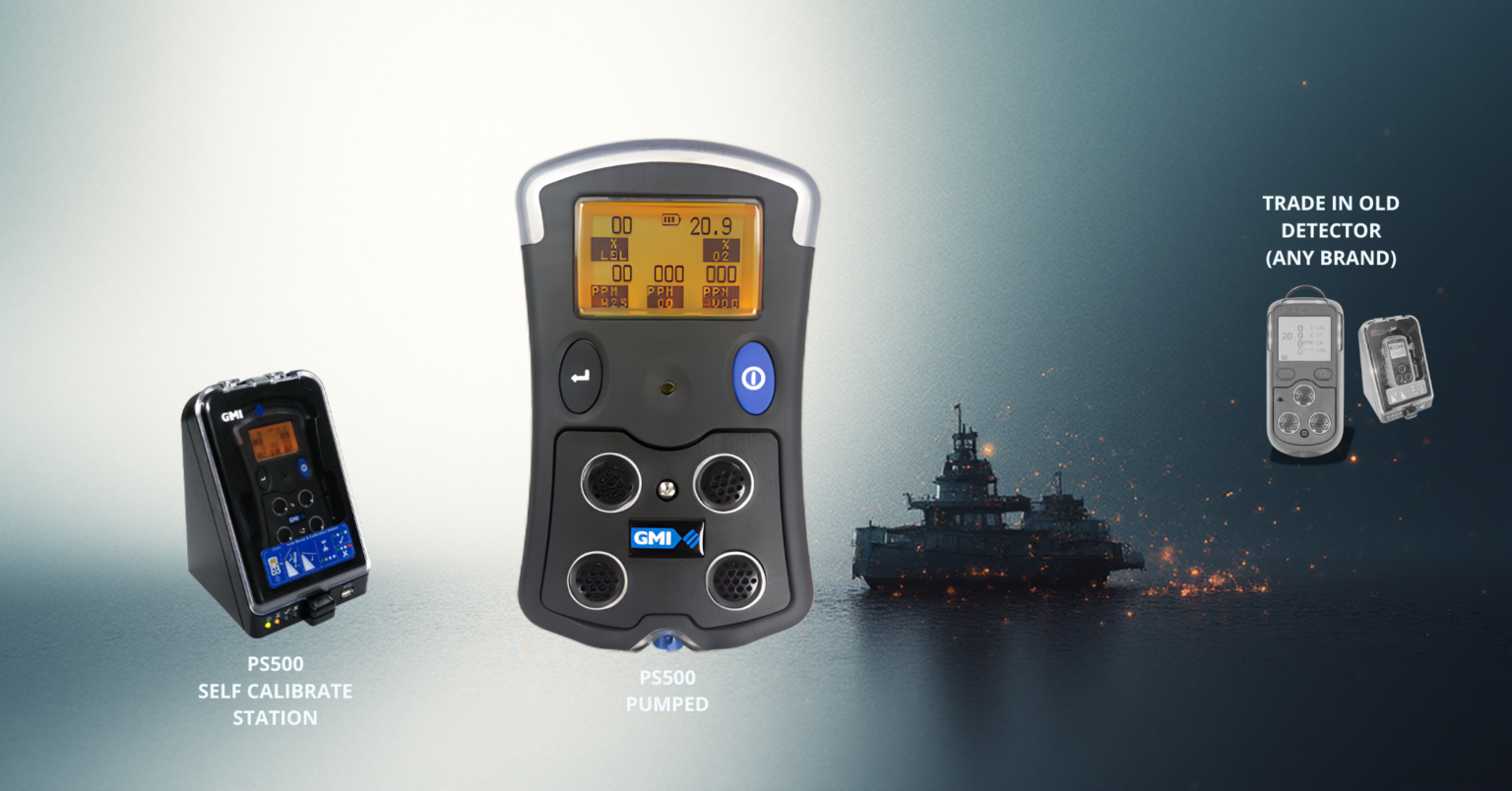
Teledyne PS500 Multi-Gas Detector 5 in 1 (O2/H2S/CO/LEL/CO2)
Rugged, Reliable Personal Gas Monitoring for Enclosed Space Entry – IMO MSC.581(110) Ready
The Teledyne PS500 is a high-performance portable multi-gas detector engineered to meet the enhanced safety expectations of IMO Resolution MSC.581(110) for entering enclosed spaces aboard ships and offshore units. With its robust design and flexible sensor options, the PS500 provides real-time atmospheric monitoring to help ensure compliance with the latest industry safety guidance and risk-assessment protocols.
🌊 Designed for Maritime Safety & Compliance
Under IMO Resolution MSC.581(110), crews must verify atmospheric conditions — including oxygen levels and gas hazards such as CO₂, flammables, and toxic gases as A. — before entering enclosed or connected/adjacent spaces. B. The PS500 is equipped with an internal sampling pump, enabling compliance with enclosed-space entry requirements through versatile gas detection using a flexible hose or sampling line The PS500 self-calibration station allows quick and simple calibration while automatically generating test certificates to support accurate record-keeping and compliance documentation.
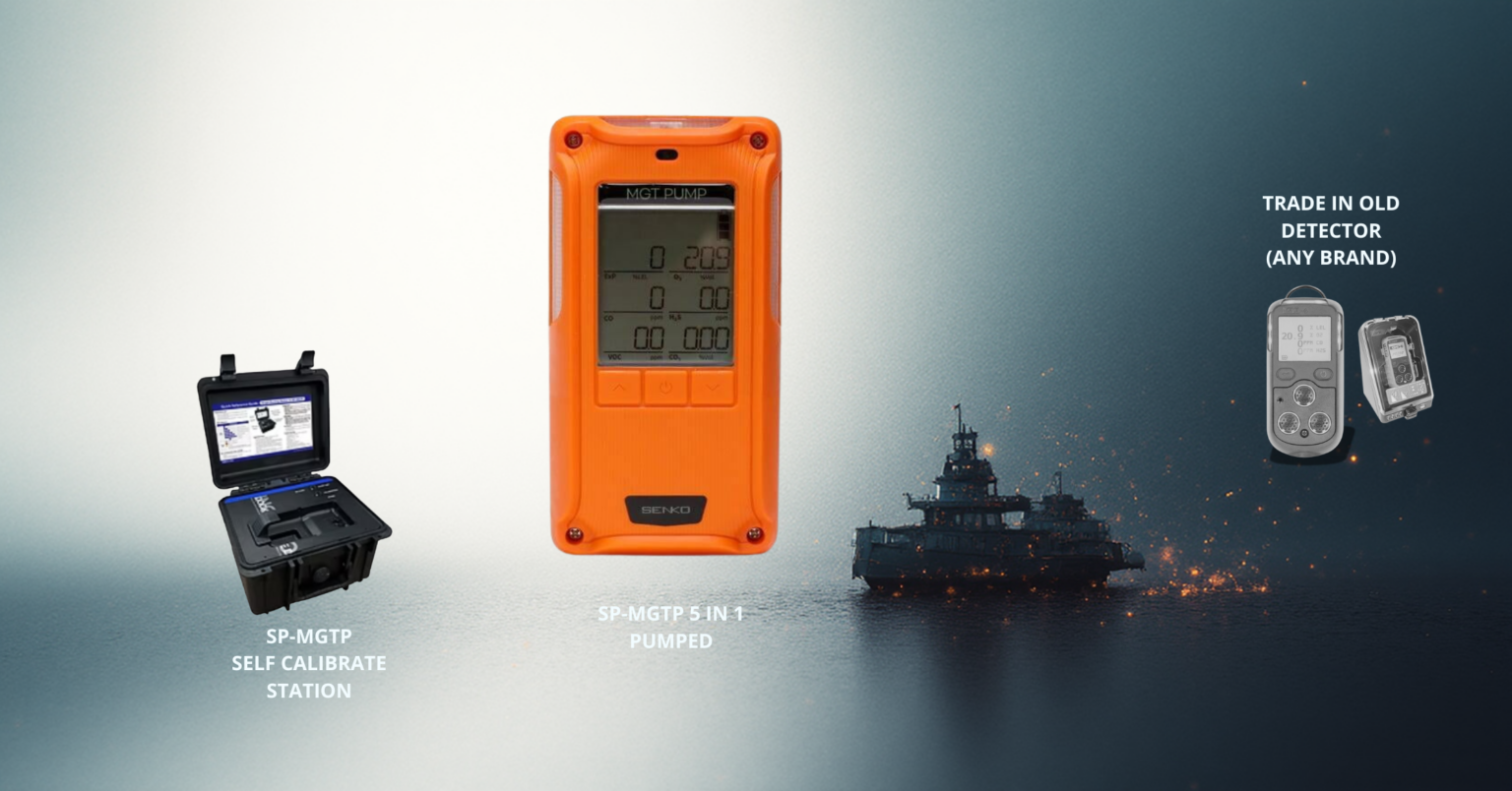
Cost-Effective Safety Without Compromise
While both the Schützen SP-MGTP and the Teledyne GMI PS500 deliver reliable multi-gas detection for marine and industrial safety, the SP-MGTP stands out as a budget-friendly solution for teams looking to meet IMO MSC.581(110) enclosed space entry requirements without overspending. The SP-MGTP provides all the capabilities — including CO₂ detection/sampling pump and rugged performance needed for compliant atmospheric testing and personal monitoring, but at a significantly lower cost than the PS500. It’s self calibration station is easy to use, able to generate test certificates too.
For operations focused on practical, day-to-day confined space safety and permit-to-work programs, the SP-MGTP delivers strong performance and dependable data logging at a more accessible price point, making advanced safety technology more attainable across your fleet or workforce.
In contrast, the PS500’is MED approved but comes with a higher price tag. (Vessels registered in the European Union (EU) and European Free Trade Association (EFTA) countries (like Norway, Iceland) need Marine Equipment Directive (MED) (Wheelmark) approved equipment). The SP-MGTP is the smarter choice for budget-conscious users who does not require MED but require full IMO compliance and reliable gas detection.
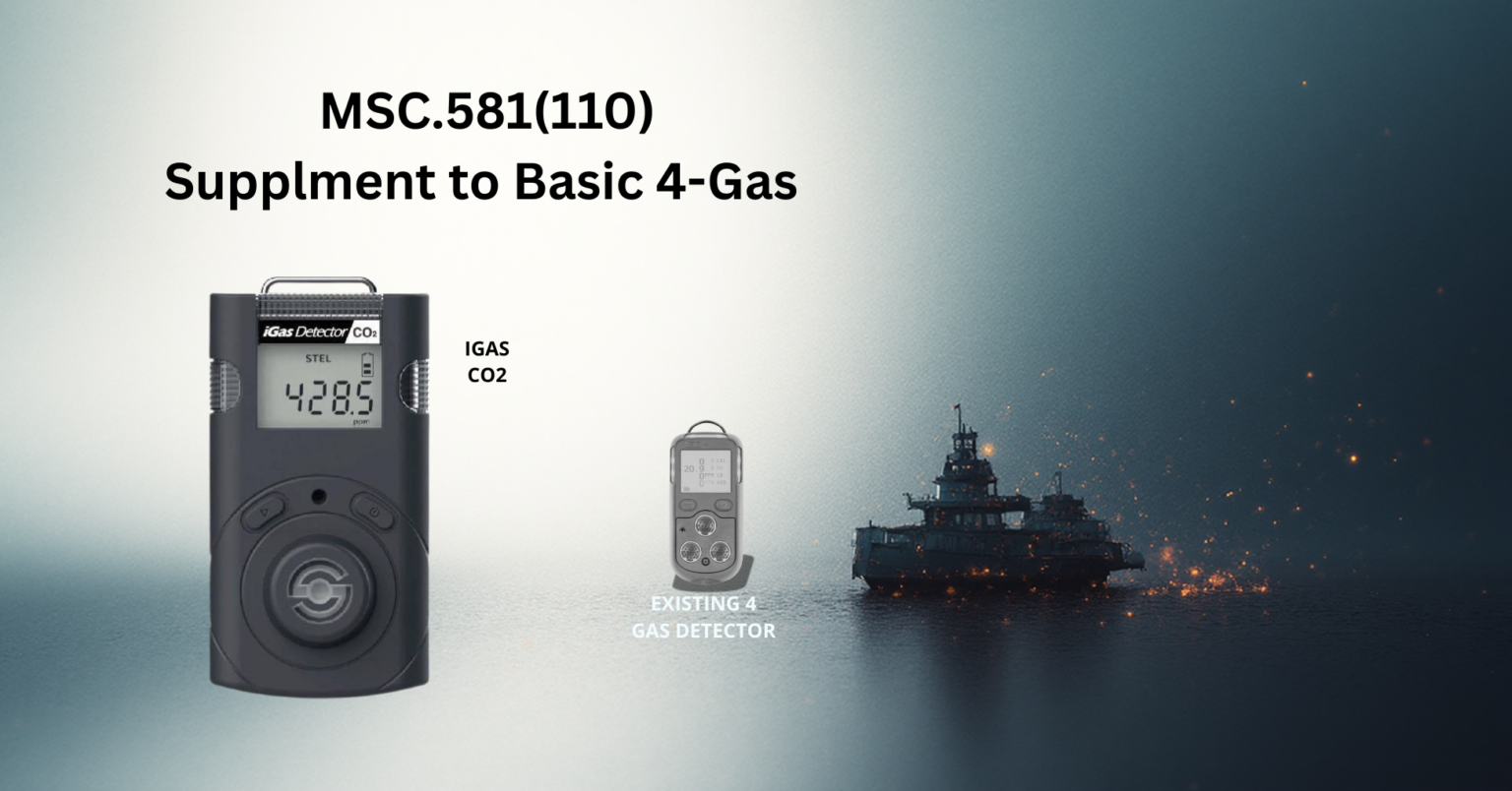
Supplement with Schützen CO₂ Detector: A Smart, Cost-Effective Path to IMO MSC.581(110) Compliance
The IMO Resolution MSC.581(110) introduces an increased focus on carbon dioxide (CO₂) monitoring during enclosed space entry. For operators seeking a practical and economical compliance solution, supplementing your existing multi-gas detector with a dedicated CO₂ gas detector offers significant advantages over immediate full system replacement.
Cost-Effective Compliance
Using a separate CO₂ detector, such as the iGas CO₂ detector, provides a reliable and affordable way to meet the new CO₂ monitoring requirements. The iGas CO₂ detector utilizes NDIR sensor technology, delivering long sensor life, stable readings, and reduced calibration frequency — helping minimize long-term maintenance and replacement costs.
Optimized Use of Existing Equipment
By adding a standalone CO₂ detector, existing multi-gas detectors can continue to be used throughout their remaining service life, avoiding premature replacement. This phased approach allows operators to maintain compliance with MSC.581(110) while maximizing the return on previous equipment investments and planning future upgrades more efficiently.
Flexible & Practical Deployment
Combining existing basic 4 gas detector with a dedicated CO₂ monitor provides flexibility for pre-entry testing and continuous personal monitoring, aligning with enclosed space risk assessments without the higher cost of immediately transitioning to a fully integrated 5-in-1 detector for every user.
Budget-Smart Transition Strategy
This hybrid solution supports safety compliance today while allowing organizations to gradually transition to integrated multi-gas detectors with CO₂ when budgets permit — ensuring both regulatory alignment and financial control.
Optimized budget use – Your existing gas detectors can continue to be used until the end of their service life, avoiding unnecessary replacement before transitioning to a 5-in-1 detector.
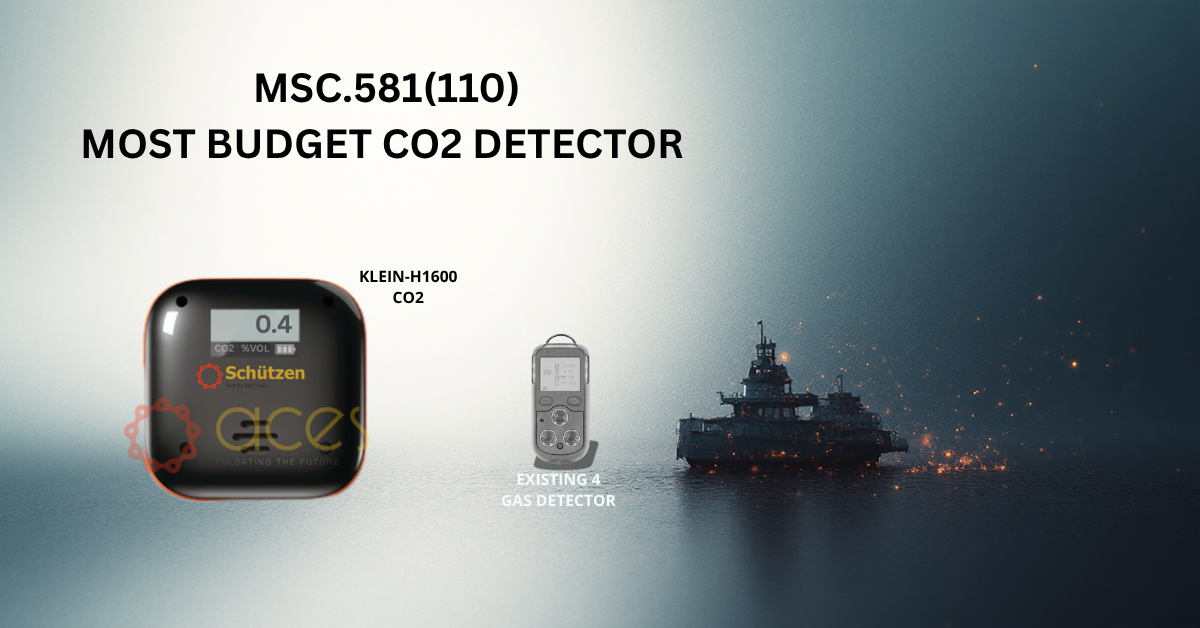
Supplement with Schützen Klein-H1600 CO₂ Detector: Most Budget Path to IMO MSC.581(110) Compliance
Cost-Effective Cost-Effective Cost-Effective
Really have no budget right now, or planning to upgrade to a 5-gas detector only next year?
The Schützen Klein-H1600 CO₂ Detector offers an unbeatable price and a highly affordable way to temporarily meet new CO₂ monitoring requirements. Compact and easy to use, it fulfills basic compliance needs for personal CO₂ detection with ex-proof certification.
In spite being small, you are still able to do sampling by purchasing a external sampling pump. The Schützen AGH1000B Sampling Pump is also ex-proof, and has a powerful flow rate of 500 ml/min and come with a low price tag too.
The Schützen Klein-H1600 CO₂ detector utilizes IR sensor technology, delivering long sensor life, stable readings, and reduced calibration frequency — helping minimize long-term maintenance and repair costs.
Optimized Use of Existing Equipment
By adding a standalone CO₂ detector, existing multi-gas detectors can continue to be used throughout their remaining service life, avoiding premature replacement. This phased approach allows operators to maintain compliance with MSC.581(110) while maximizing the return on previous equipment investments and planning future upgrades more efficiently.
Flexible & Practical Deployment
Combining existing basic 4 gas detector with a dedicated CO₂ personal monitor provides flexibility without the higher cost of immediately transitioning to a fully integrated 5-in-1 detector for every user.
Budget-Smart Transition Strategy
This hybrid solution supports safety compliance today while allowing organizations to gradually transition to integrated multi-gas detectors with CO₂ when budgets permit — ensuring both regulatory alignment and financial control.
Optimized budget use – Your existing gas detectors can continue to be used until the end of their service life, avoiding unnecessary replacement before transitioning to a 5-in-1 detector.
Schützen Klein-H1600 CO₂ Detector, everything you needed for this price tag, what are you waiting for?