Features:
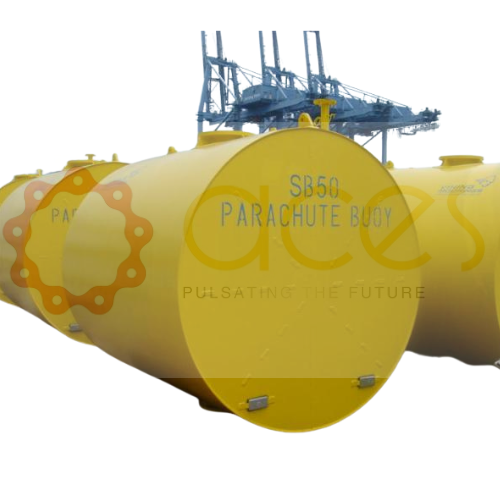
- Maintain Clearance – They ensure that the mooring lines do not come into contact with pipelines or other subsea infrastructure, preventing damage and ensuring safe operations.
- Support Load – When the mooring lines stretch over long distances, the working tensions can be significant. Parachute buoys help support the wire, preventing it from sagging too low.
- Protect Anchors – By supporting the lines, they reduce the uplift forces on the anchors, which can be detrimental, especially for certain anchor types.
- Why They’re Used:
1) Industry Standards – API (American Petroleum Institute) requires a minimum vertical clearance above pipelines (10m), and some operators may impose a higher clearance (20m). Parachute buoys help meet these requirements.
2) Mooring Analysis – The need for parachute buoys is determined through mooring analysis, which considers the specific conditions of the project, including the length of the mooring lines, the depth of the water, and the expected environmental conditions.
3) Safety – They are crucial for maintaining the integrity of the mooring system and preventing damage to subsea assets, contributing to the overall safety of the operation.