
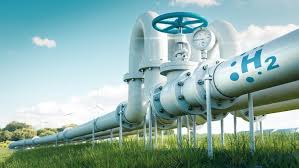
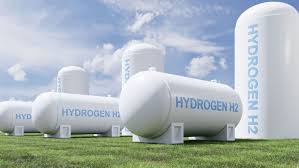
Hydrogen is not only a vital industrial gas but is also gaining prominence as a fuel source. Its unique properties distinguish it from other fuels, presenting both distinct functionalities and hazards.
As the global hydrogen economy expands, hydrogen is poised to significantly contribute to the decarbonization of the world’s energy resources. However, implementing hydrogen technologies necessitates strong safety protocols, including the installation of dependable hydrogen gas detection systems
The Significance of Hydrogen
Almost all fuels used globally today are derived from naturally occurring oil or gas, both of which are finite resources and contribute to environmental harm. Consequently, there is a global transition toward renewable energy sources.
The rise in renewable energy production introduces its own set of challenges: How can we store energy generated from intermittent sources such as wind and solar? Additionally, how can the transportation and industrial sectors, which depend on energy-dense chemical fuels, function effectively in a post-carbon economy?
Hydrogen may be the optimal solution to these challenges. Currently, most hydrogen is produced through steam methane reforming (SMR) and is primarily used as an industrial gas. However, renewable energy can be harnessed to produce hydrogen through methods like water electrolysis, effectively storing energy in hydrogen molecules. In this role, hydrogen serves as a medium for energy storage rather than a traditional fuel.
Hydrogen presents several advantages over other energy storage technologies. Similar to conventional fuels, it boasts a high energy density—surpassing that of batteries or capacitors—and can retain energy indefinitely without losses. Moreover, unlike traditional fuels, hydrogen produces no hazardous emissions at the point of use; the only by-product of hydrogen combustion is water. While hydrogen technology is still emerging, there are strong indications that it could become considerably more cost-effective per unit of stored energy compared to batteries.
The Risks of Hydrogen
The growing adoption of hydrogen technologies brings certain challenges. While hydrogen is an effective fuel, it poses a significantly greater explosion risk than many other liquid and gaseous fuels.
This increased risk arises from two key factors. First, hydrogen is considerably more challenging to contain compared to other gases. Hydrogen gas consists of H2 molecules, each formed by two hydrogen atoms bonded together, making H2 the smallest molecule in existence. As a result, hydrogen gas is highly susceptible to leaks.
Second, hydrogen is extremely flammable. It can ignite in the presence of air at concentrations ranging from 4% to 75% by volume—far broader than methane, which is flammable only within a range of 4.4% to 17% by volume. Moreover, the energy required to ignite a hydrogen/air mixture is substantially lower than that needed for other fuels, with the minimum ignition energy for hydrogen being just 0.017 mJ. In comparison, the minimum ignition energy for hydrocarbon fuels like methane and propane is around 0.3 mJ.
Consequently, hydrogen leaks are relatively common, and even minor leaks can ignite easily. It is crucial to implement appropriate measures to minimize the risk associated with hydrogen leaks.
Hydrogen Gas Detection Technology
Hydrogen is an odourless, colourless, and tasteless gas. Industry, therefore, relies on hydrogen gas detectors to detect leaks. Aces has two technologies suitable for detecting hydrogen: pellistor sensors and electrochemical sensors.
Pellistor
Pellistor, or catalytic bead, sensors rely on the use of a catalyst that causes flammable gas within the sensor to ignite at a much lower temperature than usual. When combustion occurs, heat is produced in proportion to the amount of flammable gas present. The concentration of flammable gases can then be derived from this measurement and expressed as a percentage of the lower explosive limit (%LEL).
Electrochemical
Electrochemical sensors work by reacting the target gas – in this case, hydrogen – with an electrolyte, which produces a current in proportion to the amount of gas present. This allows for much more sensitive hydrogen gas detection compared to pellistor sensors. For example, 25% LEL equates to 1% hydrogen concentration, or 10,000 ppm. The downside of this extreme sensitivity is that electrochemical sensors can be destroyed on exposure to levels exceeding their measurement range, requiring them to be replaced. IGD electrochemical hydrogen detectors are ideally suited to applications where detection of hydrogen at low levels is critical.